
Safety First: Flooring Solutions That Protect
Understand how flooring systems can support workplace safety through appropriate surface finishes, slip resistance, and durability.
The floor affects safety in almost every part of an industrial building. Slips, trips, damaged joints, and uneven surfaces cause injuries and damage to equipment and goods. Choosing and maintaining the right floor reduces those risks.
Slip resistance
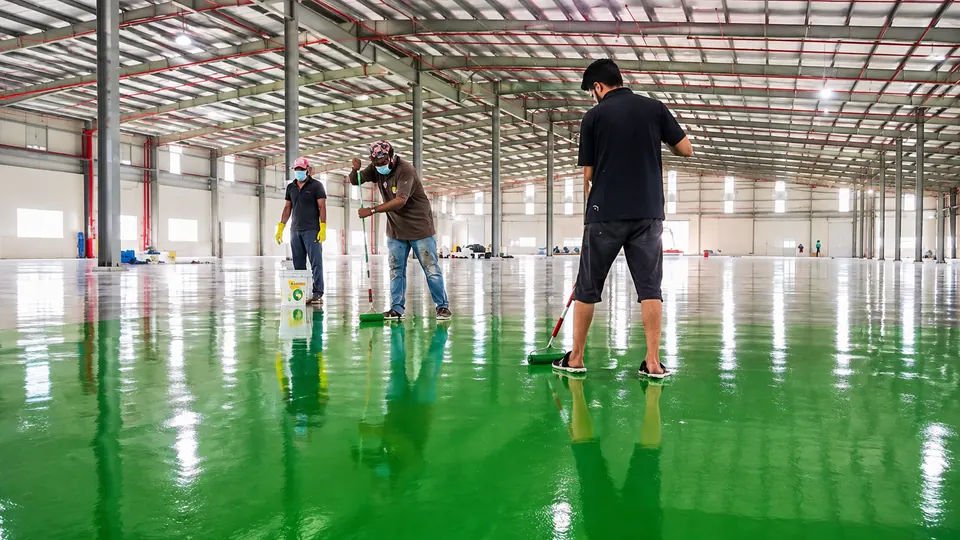
A very smooth floor can become slippery when wet, oily, or dusty. The right level of texture depends on how each area is used: a dry storage aisle needs something different from a wash-down zone or a loading dock exposed to rain. Coatings can include anti-slip aggregates, and cleaning methods should keep that texture effective.
A flat, even surface
Uneven floors are a trip hazard for people and a stability risk for forklifts and tall racking. Good levelling during construction, followed by prompt repair of damaged areas, keeps the surface predictable underfoot and under wheels.
Sound joints and edges
Damaged joints create bumps that jolt material-handling equipment and can cause loads to shift. Well-filled joints and repaired edges give a smoother ride and reduce wear on wheels as well.
Clear marking
Line marking for walkways, forklift routes, storage areas, and hazard zones helps people and vehicles stay where they should. Coloured coatings make these zones easy to see and maintain.
Dust control
A dusting concrete surface affects air quality and settles on goods and equipment. Densifying, hardening, or coating the surface reduces dust at the source.
A simple safety checklist
- Check for slippery areas after cleaning and in wet zones.
- Report cracks, holes, and damaged joints quickly.
- Keep line markings visible and up to date.
- Review the floor whenever the use of an area changes.
ASVDF Flooring offers concrete flooring, epoxy flooring, floor hardeners, joint filling, and repairs. Contact us to discuss the safety needs of your facility.
- Industrial Flooring
- Concrete Floors